Note to Internet Publication:
The following is the major part of a paper submitted to The Board of Architects of NSW, Australia as requirement for the Byera Hadley Travelling Scholarship -The piece was concieved in 1995 and written in 1997. I really don't know if it can be of use to any one. My thoughts around the theme remain fluid and while some of what I have written remains- for me-valid; other parts are not.
LW.
TABLE OF CONTENTS
Preface:Introduction:
Case studies
Its Franks City, we’re just visiting:
Blade Runner:
The Transformation:
Reflections:
References:
Image credits:
I never entertained any thoughts of going to Los Angeles. Maybe I knew it in my bones but I never considered it rationally until the question arose. Where would you go in the world to study architecture that was relevant to us, here in Australia? This was the question I read in Byera Hadley and I immediately thought of the largest, ugliest, city I knew with a comparable culture.
In preparing for this journey I endeavoured to learn as much about the city as possible. Maybe it would make things a little easier. I used it as a base for my university thesis during which time I fortuitously stumbled on Rem Koolhaas and his work Delirious New York. With everything I had consumed in researching the thesis, I declared that if New York was the most powerful city of the first half of the twentieth century then LA was that of the second half; in many ways a product of the same forces. The proposition was probably badly stated, however, my supervisor declared it a ridiculous farce, and after reading just 8 of 58 pages passed me on to someone else. I knew then I was onto something.
By the time I departed Sydney, LA was a looming, part phantasmagoria, part cruel nightmare.
As an exercise this paper is rather less rigorous and less problematic than an academic thesis. Its primary concern regards the condition of a city (as worked on by architects) which like metropolitan Sydney, moves with unstoppable momentum. From an architect’s perspective Jaques Lacan’s metaphor of the architect as surfer has ground. The surfer can never interfere with the inevitable motion of the wave, she can only with deftness and tenacity manoeuvre on it to advantage.
The horizon of the study should also be noted. It is never an easy task (I discovered) to define where Los Angeles is. Or rather where it stops. Greater Los Angeles comprises 5 counties, which have no clear boundary. (If it were not for the military installations there is no doubt Orange County would bleed into San Diego). The population of this metropolis is around the 14.5 million mark. The Los Angeles I lived in was ‘old’ Los Angeles. A city of approximately 3.1 million people with a population density twice that of Sydney.
After two weeks in Los Angeles I somehow hated it. When I left 8 months later I would have liked to stay. It is a powerful place yet for all its well publicised shortcomings it can be incredibly stimulating and without a doubt a worthwhile focus of study.
In the relative confusion of our metropolitan civilisation we find growing numbers of displaced fragments which appear without intrinsic relationships with each other. In an attempt to acknowledge the root of this phenomenon I have asked two questions: Is it apriori that for healthy, fulfilling human life such relationships are necessary? And. What, if anything, can architecture investigate to establish such relationships?
This brief paper suspends the answer to the first question and for the second turns to the city of Los Angeles for some insight.
Spending any time in Los Angeles, one senses a heightened, almost demonstrative sense of nowhere. Certainly not an isolated contemporary experience but here, clearly exemplary. Under the rubric of reason, logic, economy, democracy and progress, Los Angeles - conditioned by optimum technology, automobile distribution and rapacious property speculation - has in any traditional sense, severely limited its possibilities for creating significant urban form. For any visitor to the city the malady is evident enough; casting the net further, what we observe in Los Angeles is an environment which lacks any clear system of values significant enough to contribute to the practical activities of constructing architecture and cities in any systemised way.
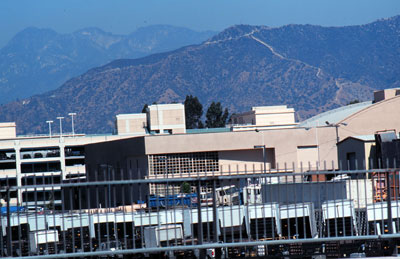
Figure 1: A typical long view, Los Angeles
This malady has been expressed in many ways in a plethora of texts about Los Angeles; Banham, morphologically; Soja, politically; Davis, socially; Jencks, stylistically; Baudrillard, ontologically; et.al. And, it would not be offensive to anyone, - with its traffic congestion, sterile office parks and shopping malls along with acres of on grade parking- to call LA ugly, despite what was once a stunning natural location. But within this vast conurbation there are traces of activity, which indicate positive change.
While much of America abandons - in embarrassment - its policies regarding Corbusien type urbanism in favour of new urbanism or neotraditionalism lead by protagonists such as Peter Calthorpe and the office of Duany Plater-Zyberk Los Angeles presents a remarkably alternative phenomenon. The specific nature of the city can be read not as urban space formed by streets squares and building facades; also not as a series of objects set in some kind of ideal landscape or tamed nature, rather it is very much a hybrid. The residue urban space formed by buildings is far from continuous yet their contiguity is somehow suggestive of traditional urban space. Alternatively the buildings are not so much objects as partial visions and discreet events in a continuous perspectival field. It is in this context that LA can be discussed as a hybrid city; without a core, without periphery. It exists, is perceived and interpreted by those who contemplate it. It is territory at the limit. According to de Sola-Morales, the limit is a place defined by the opposition between some kind of institutionalised centre and. "a periphery, that dissolves away, uncontrolled and empty."
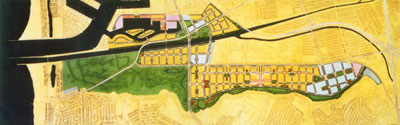
Figure 2 : Playa Vista Masterplan
Institutionalised centres in LA are not found in the towering piles of downtown skyscrapers, they, according to Mike Davis, are something of an aberration,but within the very fabric of its basic building blocks which are organised according to their own particular logic. Limits then are never fixed once and for all; they emerge, and shift with each individual act and perception. It is between institutionalised centres and emptiness, - the limit, or margin - where LA architects and their architecture strive to deliver urban identity and livability.
Los Angeles has enjoyed a history of architecture that reads something like a catalogue of 20th century single family dwellings. Greene and Greene, Gill, Frank Lloyd Wright, Schindler, Neutra, Elwood et. al. All of who produced in LA, seminal pieces of modern architecture, in a spectacular terrain and comfortable climate, all in the context of an open, uninhibited social context. For these architects along with their clients, many of them exiles and emigres, California, especially LA was a paradise of body and mind, a fountainhead of creativity. In short a landscape for truly modern life.
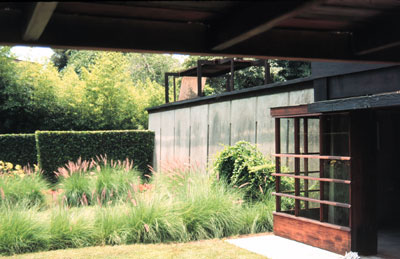
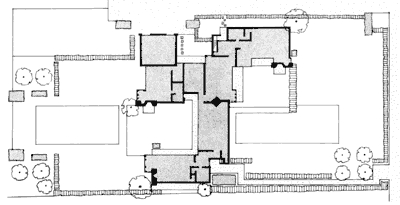
Figure 3: Rudolph Schindler House: Plan Figure 4: View to Garden from living quarters.
For architecture, this modernity culminated in the famous case study programthat had 18 modern houses built by architectures best and fairest. It was a program conceived to present to the world the inevitable success of modern architecture. Thousands of people visited the houses and the project was generally declared a great success, a success however enormously problematic. Julius Sherman who photographed this generation of architecture recalls the typical comment from the many visitors: I don’t wanna live in a fishbowl .He rightly notes the limits of this kind of architecture, and the impossibility of these fishbowls forming any part of a conventional city street where a citys’ complex contingencies (density, conflict, issues of privacy etc) would create a complete disaster. Only the idea of the single family house - by then fully established anyway - carried any real influence at the scale of the city.
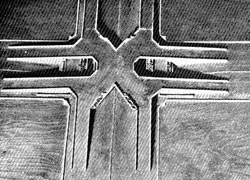
By the 1960’s the real condition of LA was derived from Jeffersons’ agrarian ideal or more profoundly Frank Lloyd Wrights’ Broadacre City delivered with the indelicate fist of unfettered American capitalism.
Figure 5 : Part of Frank Lloyd Wrights Usonian vision for the American Landscape. ‘Gracious well landscaped integrated over and underpassing’ (Wright:127).Highway Intersection Model
Its Franks City, we’re just visiting:
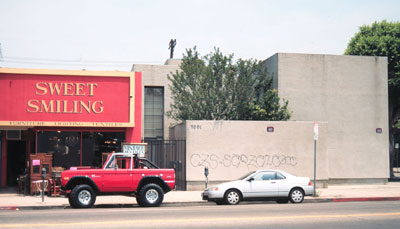
Figure 6: Danzinger residence on Melrose Avenue & La Brea
The manifestation of this failure of modern architecture was identified by Reyner Banham. Noting the absence of any significant work in LA after the last of the case study houses, Banham declared the only light on the horizon was the completion of the Danzinger Studio by a young Frank Gehry in 1969. At the time this building had little impact. A small inwardly focussed stucco box incorporating the artists studio and living space, located on the not yet gentrified strip of Melrose Avenue. Mike Davis, perhaps LA’s most caustic critic called this the first in a series of stealth houses, a kind of urban bunker where the individual of means is provided for, everybody else is cut off. The mediation between public and private, severe and brutal.
This project began to peel away the veneer of LA, which had presented through the case study houses an architecture for the upper middle class scattered in a huge, picturesque geographical situation. After all the city Gehry inherited was not like this; the city was asphalt, freeways, vast tracts of vapid single family dwellings with a building stock of poor material quality. An incohesive weak urbanism; a modern city. In this context the impact of Gehrys’ own house- which came nearly ten years after the Danzinger Studio- can not be underestimated.
The Gehry house, a renovation completed in 1978, is a significant moment in the development of contemporary architecture. Described and analysed by many, it offers few possibilities for any kind of uniform response. It is easier to say what the house is not rather than what it is, an architecture born without regard to principles, traditions and syntax. We can however locate the house within the discourse of contemporary culture; a culture of desolation and groundlessness, a culture reduced to systems of marketing and consumption. Conditions which have lead to the weakness in the modern metropolis so clearly manifest in Los Angeles.
Gehry studied urban design as a graduate student but soon realised the only way to proceed, with any real effectiveness, was by designing buildings, one by one. He surveyed Los Angeles and what he found was something like the storage yard of the Home Depot,picking up structural timber, galvanised steel, concrete blocks, chainwire, bits of steel plate etc. Then proceeding something like a plastic artist he demonstrated anew how architecture might act as an art of invention and strategic transformation. Striking a rare chord of reality in the process. There is no question of perversion or excess; Gehrys’ house along with the substantial body of work, which has followed, is architecture outside normative intention, without doctrine, opaque to functional expression; autonomous. While his projects have become progressively sophisticated commensurate with his experience and increasingly substantial commissions, his projects have maintained - if it is not an oxymoron - an inconclusive provisional character, erupting here and there in an unpredictable way.
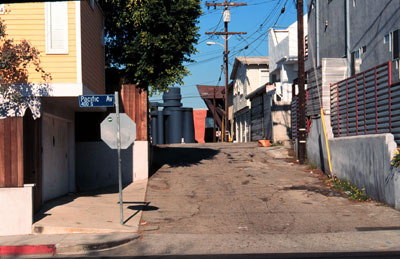
Figure 7 : Gehry as rarely seen - in context!
Referring back to the city, Gehrys’ projects speak not of continuity, rules, typology. Rather they speak at the surface of the event. Their eruption is instantaneous influencing not only their own particular space but also activating or somehow animating an undefined zone of influence, physical and mental.
The success and to some extent acceptance of Frank Gehry was the springboard for a latent group of energetic designers including Frank Israel, Eric Owen Moss, Morphosis, Hodgetts and Fung et.al. who, working in the same context wrestle with making places that somehow create meaningful urban relationships through autonomous architectural acts.
Before becoming immersed in the activity of these architects, it is sobering to reflect on the broader social context that Los Angeles embodies. In Joel Garreaus’ landmark work Edge City: Life on the New Frontier. Mark Pisano (executive director of the Southern California Association of Governments, the nations largest regional planning agency) dares to worry about a Blade Runner future. "He doesn’t mean in the Dallas architectural sense. He means armed insurrection" Garreau the quotes from LA2000: The final report of the Los Angeles 2000 committee.
Where will Los Angeles 2000 find its community, its city in common, its city unity? There is of course the Blade Runner scenario: the fusion of individual cultures into a demotic polyglottism, ominous with unresolved hostilities. The is also the possible continuation of armed camps occasionally sortieing out in attack or negotiated truce."
Garreau retorts in shock, admitting to knowledge of trouble spots in South Central Los Angeles but, ‘continuation of armed camps.’ He asks Pisano.
But I mean seriously, how bad can it get?
Says Pisano. Lebanon.
Pisano elaborates his fears, emphasising the point by mentioning that many of the LA bushfires (which that year had destroyed over 600 homes and killed at least 2 people) were acts of arson.
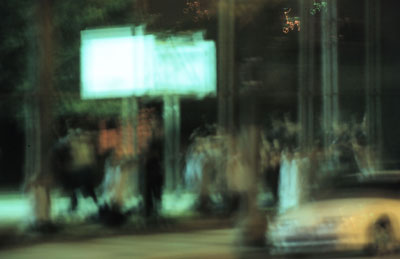
Figure 8: Los Angeles Police detain, search and question individually a group of young hispanic males in a Hollywood park at about 8pm.. There was no apparent reason for the raid other than the fact that this group were not from this particular area and therefore must be involved in some kind of gang activity. Two helicopters hovered overhead as about twenty officers delt with the twenty or so men. The ferocity of LA Police indicates the war like atmosphere they operate within.
Figure 9: The same park, 8 hours earlier
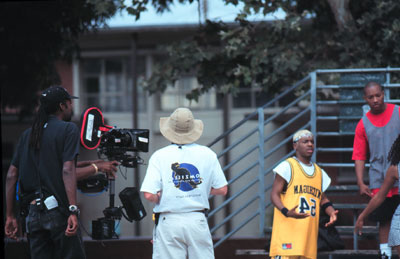
Edge City was published in September 1991. The following April the dimensions of Pisanos’ anxiety were partially realised with the so called justice riots. 52 dead, an estimated $800 million in property damage and loss along with immeasurable damage to the psyche of Angelenos. Five years later with the message of, people like Pisano and Mike Davis ringing in their collective ear, architects and architectural students alike do not roam too far without considering the broader implications of their work.
This doesn’t mean that Architecture LA style has taken on a radical social agenda, but when many of the leading lights of the profession cast an introspective critical gaze, what they inevitably saw was a huge amount of creative energy directed towards designing exotic single houses in Brentwood or Santa Barbara, or constructing interiors for the smart set to quaff bourgelais and devour salmon steaks. The riots in this sense were a patent reminder that that beneath any idea of privilege without responsibility, in any discipline, lurks trouble, big trouble.
The emphasis now in schools of architecture and practice lay with the transformation of a city suffering post riot anxiety under the constant threat of geological upheaval. A transformation not coming from grandiose gestures or sweeping reform, but from incremental evolution where discreet urban episodes are created as isolated fragments. Developing a lively, permanently incomplete metropolis.
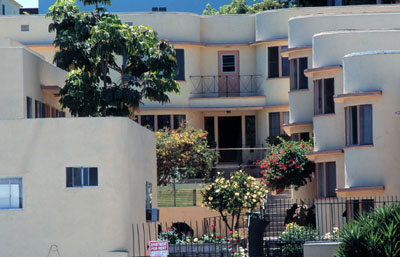
Figure 10
The idea of a transformation of Los Angeles inevitably lies within the patterns of private life; living and working in the city. LA has a generous stock of Spanish inspired courtyard housing and greater numbers of ill conceived ‘dingbat’ apartment buildings yet the type which more completely describes the urbanscape is the auto reliant, space hungry single family house.
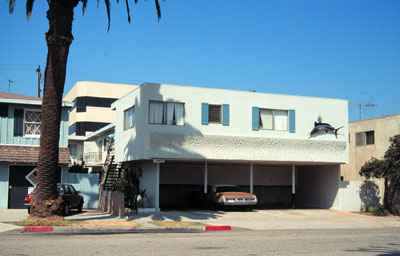 : The ‘Dingbat’ Figure 11: Typical Courtyard Housing
This issue was taken up by a six architects in an exhibition called re: American Dream: six urban housing prototypes for Los Angeles. The architects prepared hypothetical projects for real or typical sites. All founded on the notion that as the city has reached its geographical limits and its population continues to grow and diversify; then clearly the (sub)urban structure, upon which the city is founded, must evolve.
As a group they confronted the very real problems of urban housing in a social context which places the single family home at the very centre of the American Dream. All the exhibitors respected the intent of this dream as meaningful and valid yet with varying strategies propose places which increase density without losing the qualities of an individual home or an intimate relationship to generous open space. All the designs worked within the existing superstructure of the city thus emphasising the notion of transformation.
While conceived as research, where architects could roam among possibilities without constraint there is an air of reality about the outcomes that could be applied in the ‘real world’. Either as a one off or with the power of a model such projects begin the transformation Los Angeles desperately craves.
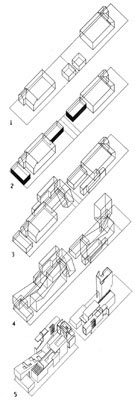
Figures 12: Gutherie + Buresh’s incremental scheme for a Los Angeles Block
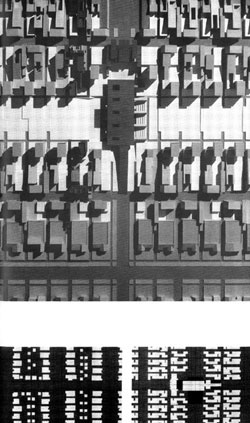
Figure 13: Figure Ground Before… After
Another example of this idea of transformation, this time in a more advanced state, can be found in Culver City. Previously a nondescript portion of LA trapped by LAX, Venice Boulevard and the Freeway 10. Its low density fabric is a mix of the ubiquitous single family house and decrepit outdated industrial buildings. The activity in this distinct area is largely due to the influx of capital generated by the redevelopment of the Culver Paramount Studios under the corporate flagship of Sony Pictures Entertainment and the vibrant architecture of Eric Owen Moss.
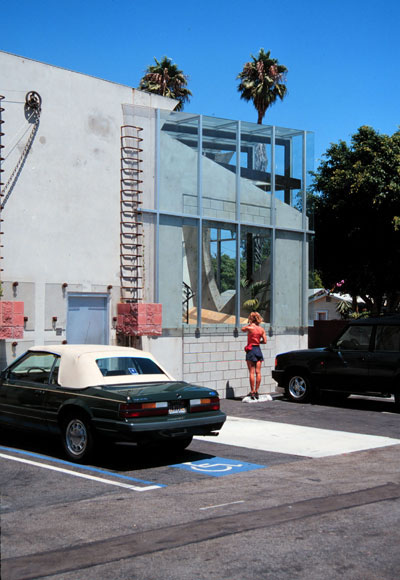
Figure 14:
The ‘Metafor’ building Culver City
In a collection of projects spanning just ten years, Moss, in concert with developers Laurie and Frederick Smith are creating an urbane environment from desolate, abandoned landscapes with a series of renovations and interventions delivered with startling panache. Dubbed a ‘jeweller of junk’ by Philip Johnson, Moss like this glib statement can be read in two ways. As an iconoclastic participant in the global discourse of architecture and contemporary culture; alternatively as an architect working with the specific and very local conditions of Culver City, creating simultaneously objects and urban spaces, which like Gehrys’ work, erupt instantaneously, surprisingly. Creating layers of complexity and density to previously bland and lifeless places.
Moss talks with intensity and infectious enthusiasm and is prepared to openly criticise his own work as well as the work of others. He calls for the active resistance to any kind of universal understanding of architecture, citing the adoption of ‘Hi tech’ and ‘New Urbanism’ as institutional appropriations of architecture which have nothing to do with making cities in our milieu.
Given the erratic nature of development in Los Angeles, architects are faced at each project problems that stem not from history and context but from culture and tectonics. This is not to suggest LA architects build what and how they want, fulfilling some inner desire.
A lasting impression of many projects, especially the early Gehry and Moss developments, pertains to their spatial and place making qualitiies. Attributes that do not lend themselves to the camera and image hungry magazines The sculptural bravado of many schemes has unduly inhibited the understanding of such projects that go far beyond tantalising stand alone form. For example the Moss Project at Ince and Lindblade, Culver City (see figure 15) makes intelligent use of the much derided LA type, ie. Dumb boxes around a dead heart of asphalt carparking. Here the buildings are opened to both street and carpark in a way that addresses both spaces as equally relevant. The facades which face the carpark are highly animated, this in concert with a small parcel landscaped carpark transforms the space into something actually quite pleasant, workers tend to relax there. Similarly, in Venice Beach, a small retail development from Gehry, circa 1987, manipulates a banal building type to cleverly form urban spaces of varying forms and levels of intimacy. Both projects were well published but the journals never expressed any sense of these urban characteristics.
Another informative characteristic of this group of LA architects is the tectonic nature of the work. As the buildings are subject to earthquakes and indeterminate lifecycles, they have little money to spend on buildings, a fact which only emphasises the breadth of achievement possible when a palette of inexpensive materials is accepted and creatively pushed to the limit.
Los Angeles when observed from within is a small city; it only becomes big when viewed from an aeroplane or when examining its political, social and economic complications. This small-ness offers opportunity and potential where architects can work piece by piece, creatively through interventions and propositions which by association have positive incidental effects. The architects discussed here, along with a number of others, understand that creating meaningful relationships between dislocated fragments of a city can only come through the careful and inventive design of those fragments themselves. Where established these relationships are widely appreciated through use by those who use the city, us.
Davis M "The Infinite Game: Redeveloping Downtown Los Angeles" in Out of Site: a social criticism of architecture, 1991, Bay Press, Seattle
Garreau J Edge City, Life on the new frontier, 1991, Double Day, New York
Jacobson, The Good House, 1990, The Taunton Press, Newtown CT
Silverstein,
Winslow
Koolhaas R Delirious New York, 2nd Edition, 1994, 010, Rotterdam.
McCoy E Case Study Houses, 1945 – 1962 2nd Edition, 1997, Henessey & Ingalls,
LosAngeles
Ojeda, Guerra Moore Ruble Yudell: Houses and Housing, 1994, Rockport Publishers, Massachusetts
.de Sola Morales I Differences: Topographies of Contemporary Culture, 1997, MIT Press.
Various re: American Dream, Six Urban Housing Prototypes, 1995, Princeton Architectural Press, Los Angeles
Wright F L The Living City,1958, Horizon Press New York
Figures Source
- Authors Photograph
- From Ojeda & Guerra (111)
- Schindler House Plan from Jacobsen (17)
- Authors Photograph
- Wright (126)
- Authors Photograph
- Authors Photograph
- Authors Photograph
- Authors Photograph
- Authors Photograph
- Authors Photograph
- Re: American Dream (74)
- Re: American Dream (67)
- Authors Photograph
- From The studio of Eric Owen Moss
- Authors Photograph
- Authors Photograph
- Authors Photograph
- Authors Photograph
About the Author